On the ground in Ukraine: Supporting animals on the frontline
Written By: James Florence, CEO
As we enter the fifth year of the full-scale invasion of Ukraine, our help and support for the amazing Ukrainian volunteers and animal shelters is needed more than ever. Being in Ukraine for this sombre milestone gave myself and W&W Project Managers Gregg and Liliana, a first hand understanding of the challenging conditions everyone is living and working under.
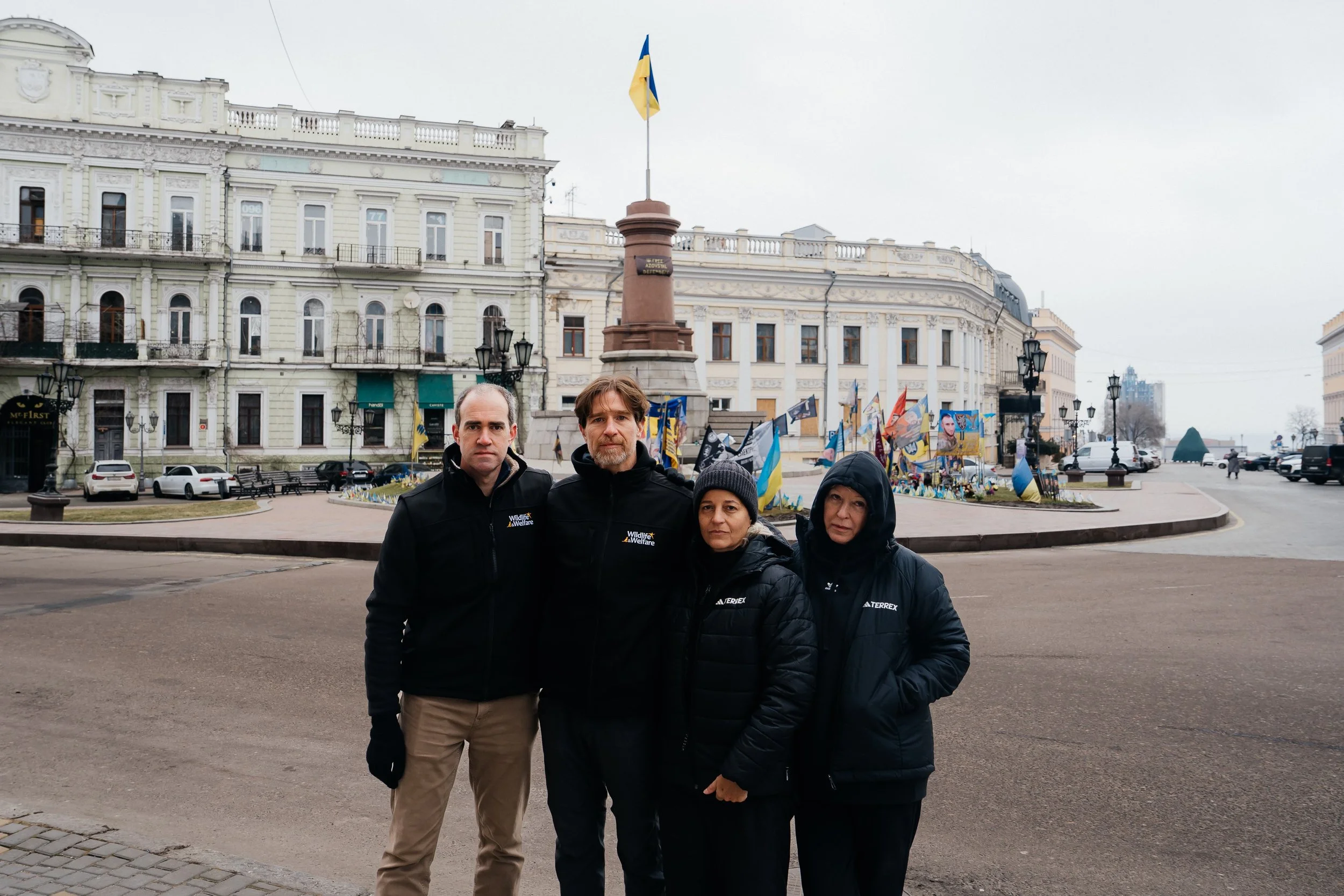
Myself, Gregg and Liliana in Ukraine
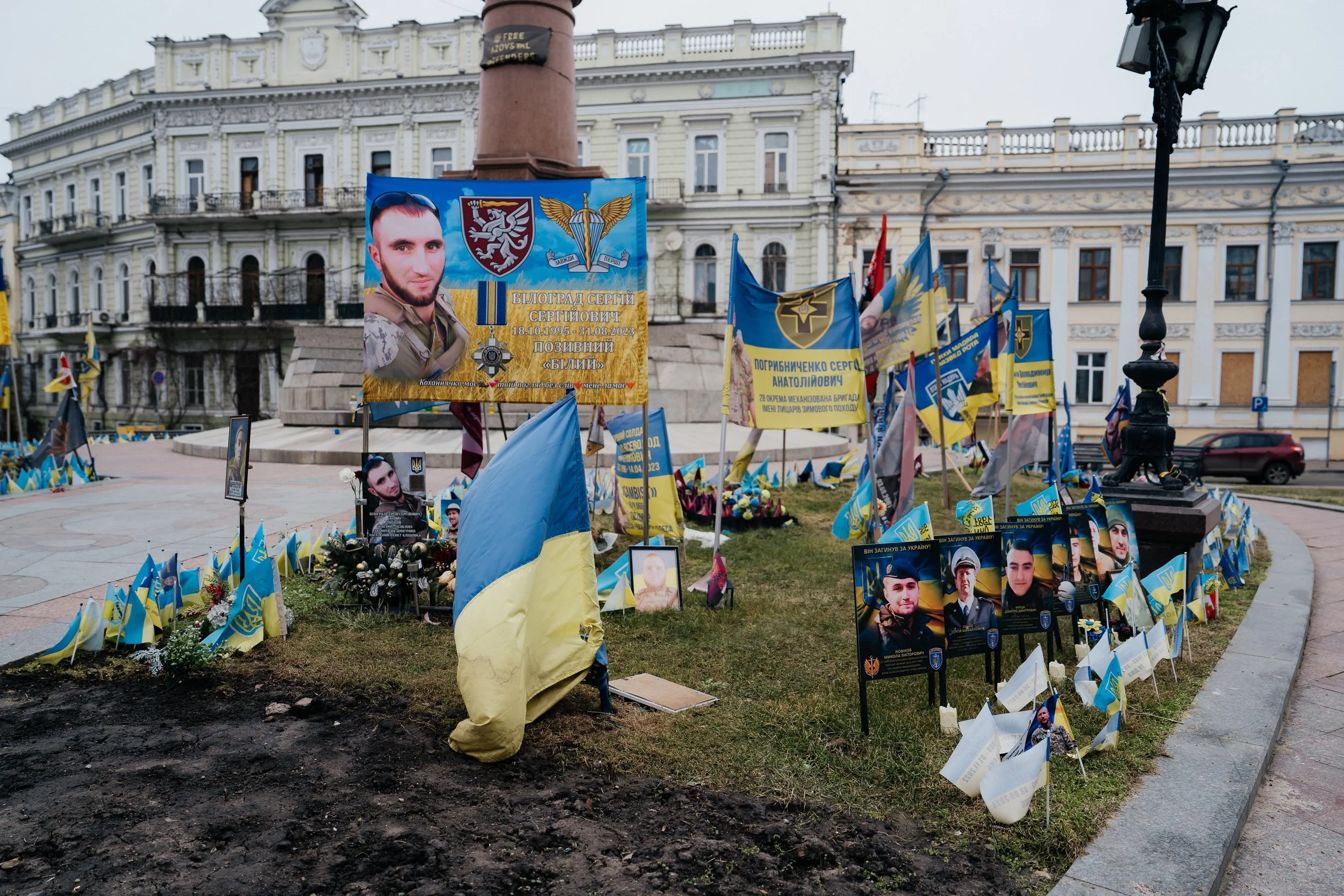
Memorial in Odessa to those lost in the war
Crossing the border from Romania to Ukraine, it is then a 4-hour drive to get to Odessa, where we based ourselves for the week. Our last visit was in 2024 and the city looks and feels much the same, but the defensive nature has changed from a possible sea or ground invasion, to that of constant threats from the air. On the drive to Odessa, our Google Maps GPS automatically turns off, which is now a regular occurrence when incoming missiles and drones have been detected. This is also confirmed via an emergency alert on our phone app, which thankfully informs you when the threat is also over.
Although the day marking the fourth anniversary of the war is not one to be celebrated, the same day is also International World Spay Day. Our work in Ukraine has been to improve the lives of dogs and cats in shelters and those living on the streets. When the war started, millions of people fled the country and a vast number of pets were left behind to fend for themselves, or were handed over to already crowded shelters. Through sterilisation and vaccination programmes, we can help maintain the dog/cat population and stop it from increasing, which would cause an even larger problem to solve in the future.
We have been running sterilisation programmes in multiple locations across the south of Ukraine and to mark World Spay Day, we travelled up to Mykolaiv to visit the volunteers and vets aiming to sterilise 150 dogs/cats in a single day. Through this one clinic, we have sterilised over 5,000 animals so far and have had a major impact in the area. Mykolaiv is less than 30 miles from the frontline and at the start of the war it had Russian troops entering the city. They were pushed back across the Dnieper River, where they still remain, but the city is now a target for missiles and drone attacks. Power cuts and air raid sirens are common, but like all other Ukrainians, work continues and 3 vets and a small team of veterinary assistants carry out surgeries and vaccinations to achieve their goal.
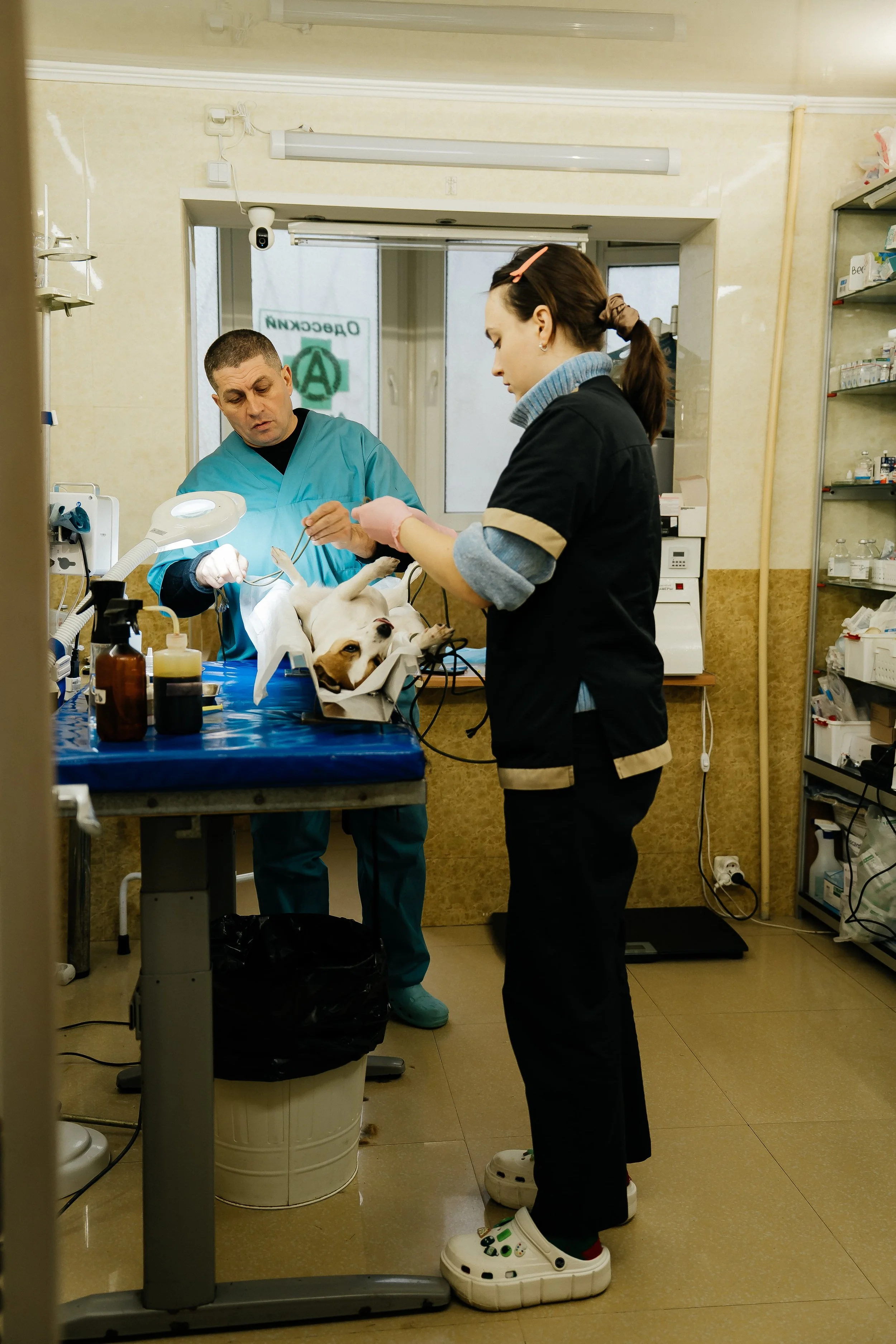
A World Spay Day steralistation
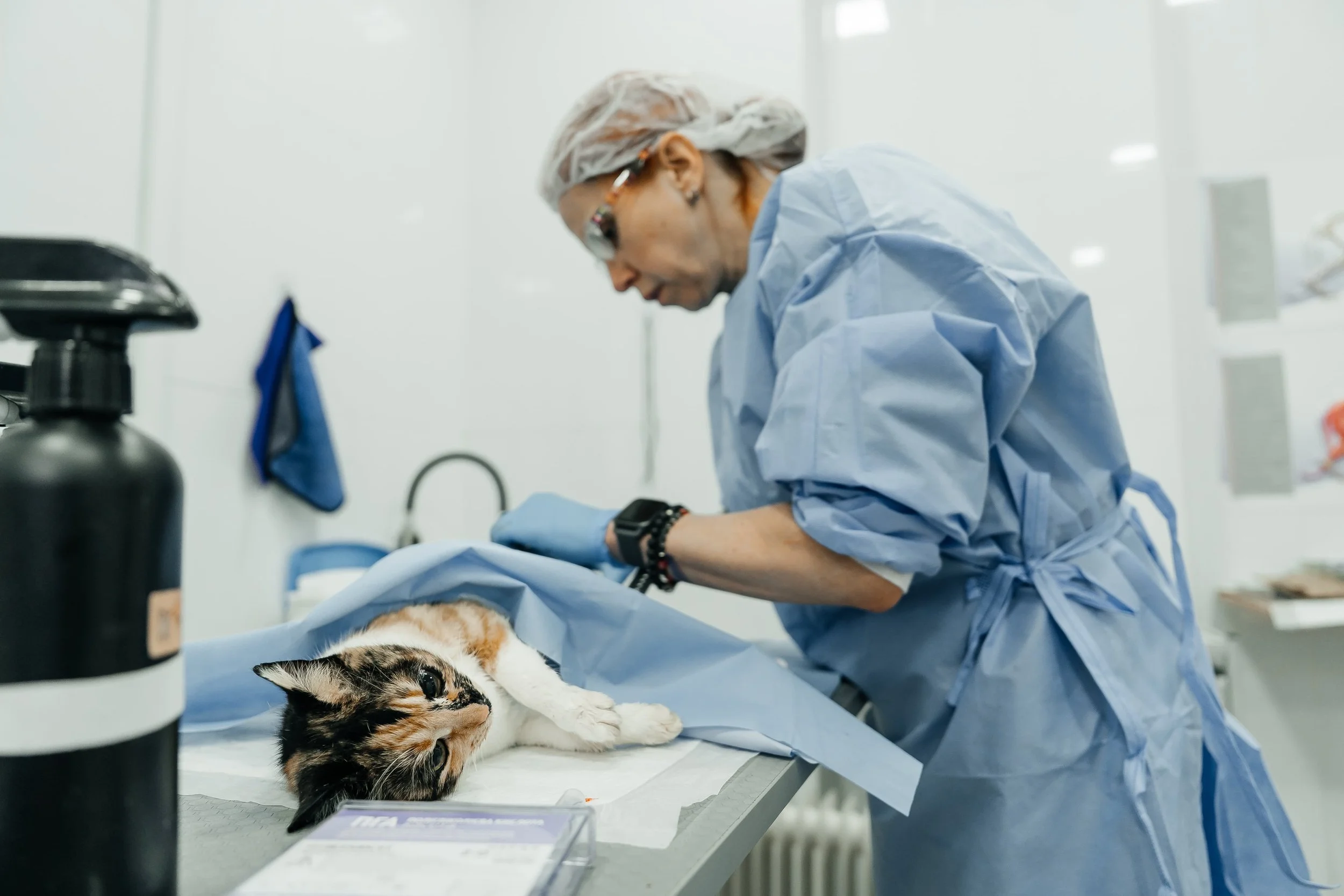
A World Spay Day steralisation
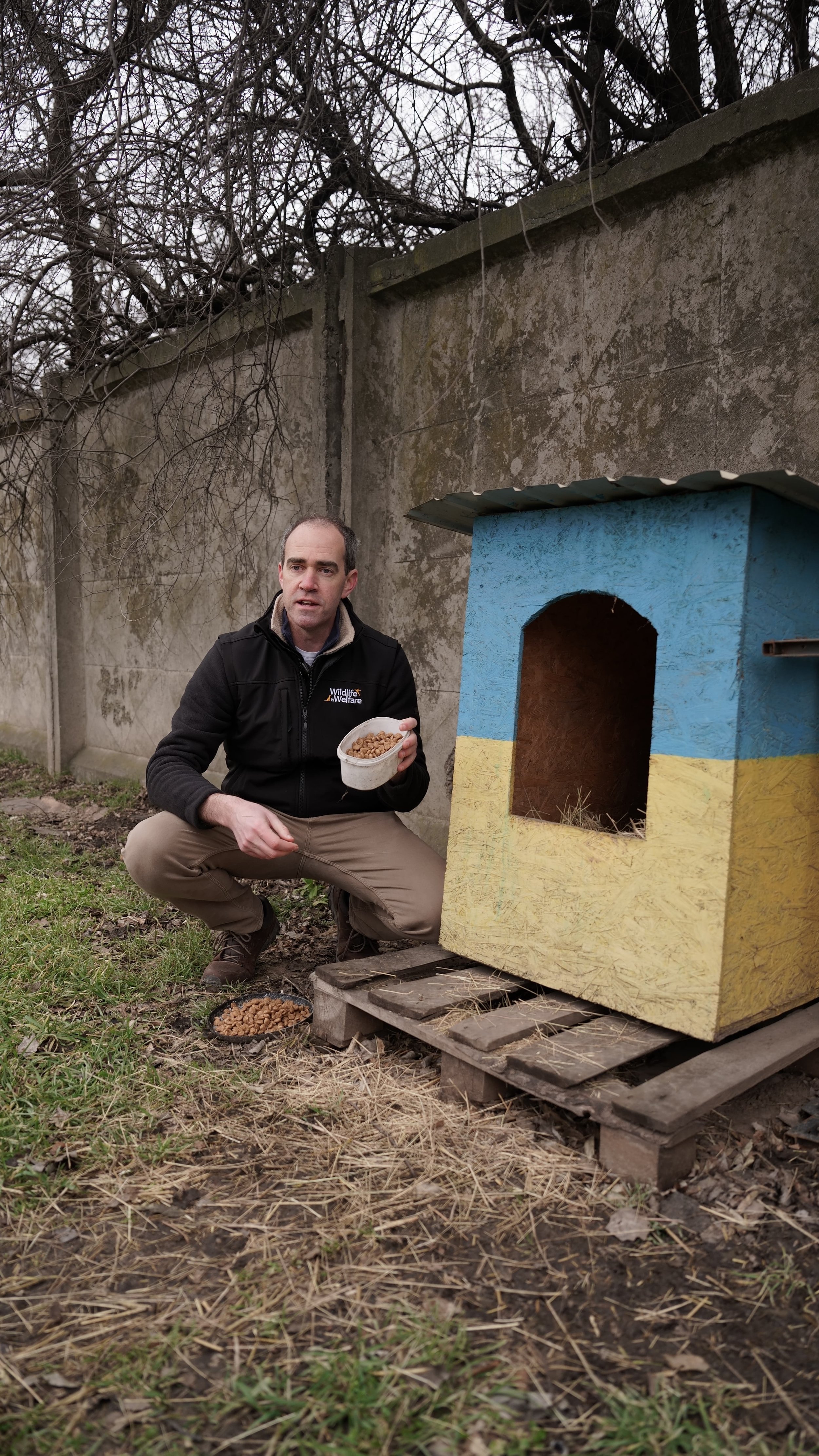
Myself with a shelter we have funded
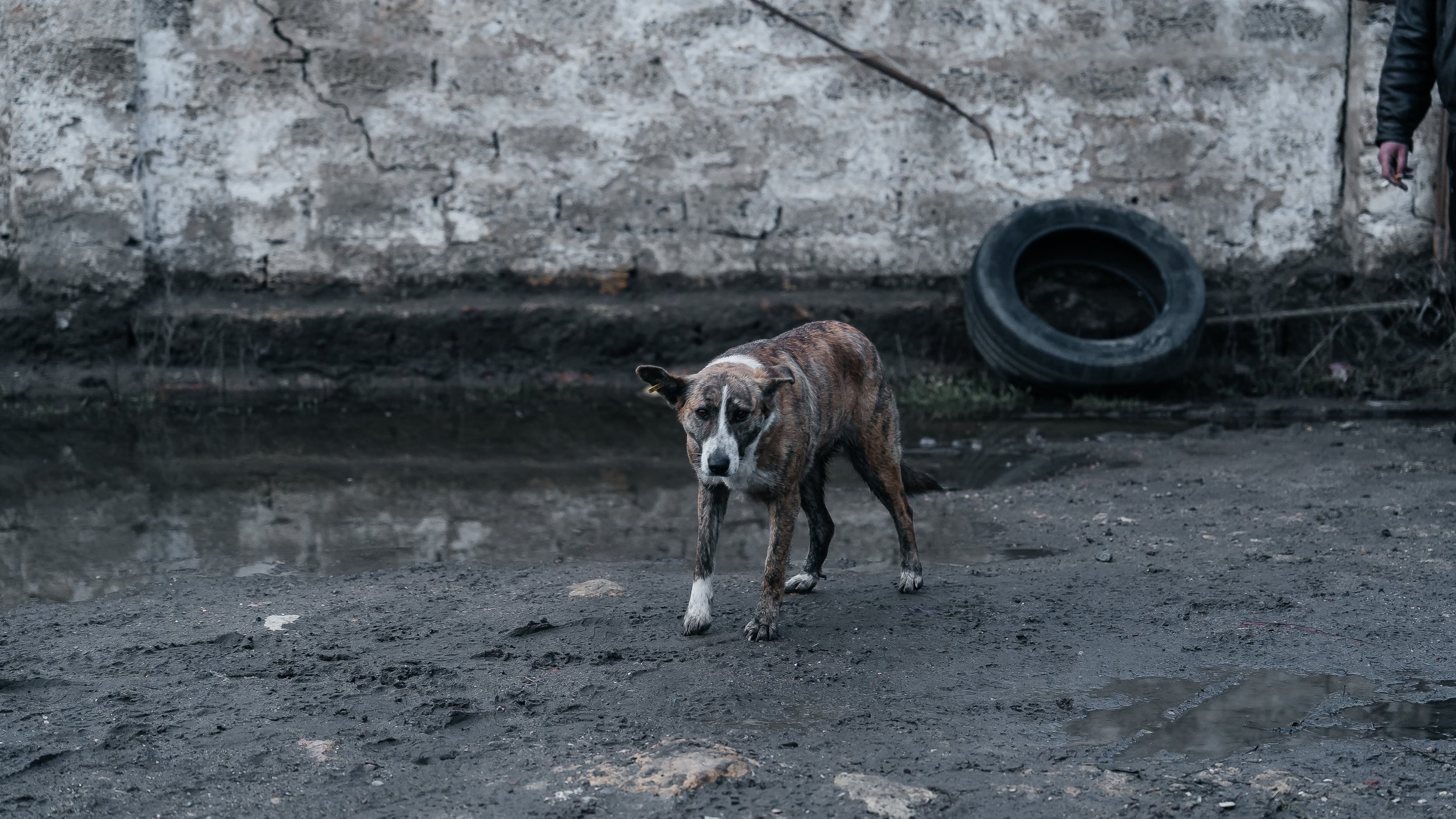
This year has seen one of the coldest winters in Ukraine for some time. Most of our visit was in temperatures of around zero degrees and with a wind chill of -10 degrees. W&W funding has been used to purchase life saving dog kennels, which are regularly maintained with fresh straw to keep dogs warm and dry. Through a network of local volunteers we provide a feeding programme for dogs and cats to ensure they maintain their body condition throughout the cold months. Over 55 tonnes of petfood, purchased from a Ukrainian manufacturer, was distributed in 2025 alone and this could easily be doubled given the need. Meeting up with many of the volunteers that help distribute this food, we see how they have formed a bond with hundreds of animals that they now care for. When we arrive at different feeding locations, excited dogs come running to the car expecting a fresh meal. While we feed them we are told stories by the volunteers about how they found the dogs and some of the traumatic situations they were rescued from. Some dogs were pets and others were born on the streets since the war commenced. Lots of the dogs now have tags in their ears to show they have been sterilised and this is one of the positive visual changes we notice.
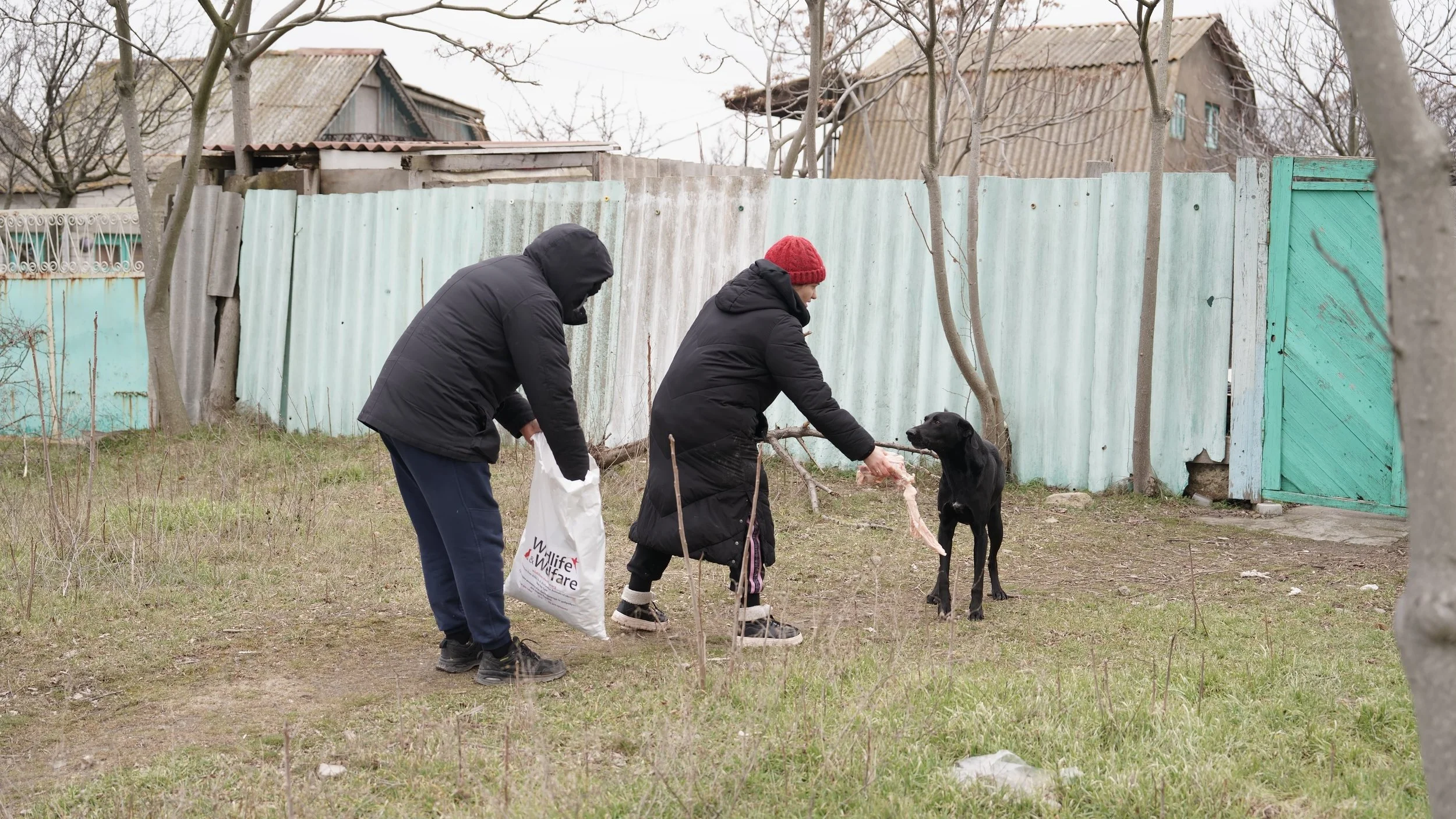

Local volunteers feeding displaced animals
One of the shelters we have been supporting has recently moved to a new location. It was previously located near a military site that was very active and had restrictions on when the shelter team could gain access. Visiting the new site, we could see the owner had learnt many lessons from her previous shelter and the layout, kennel sizes and general welfare of the animals was massively improved. We have been providing funds to help build a new veterinary clinic on site, which is going to be a huge asset once it is open. There are no vets in this area and it is a long drive to the nearest clinic if an animal is sick. This new on-site clinic will be able to provide treatment to the animals in the shelter and also act as a base to run sterilisation projects in the local area. This is a long-term project, but one in which will provide a major impact.
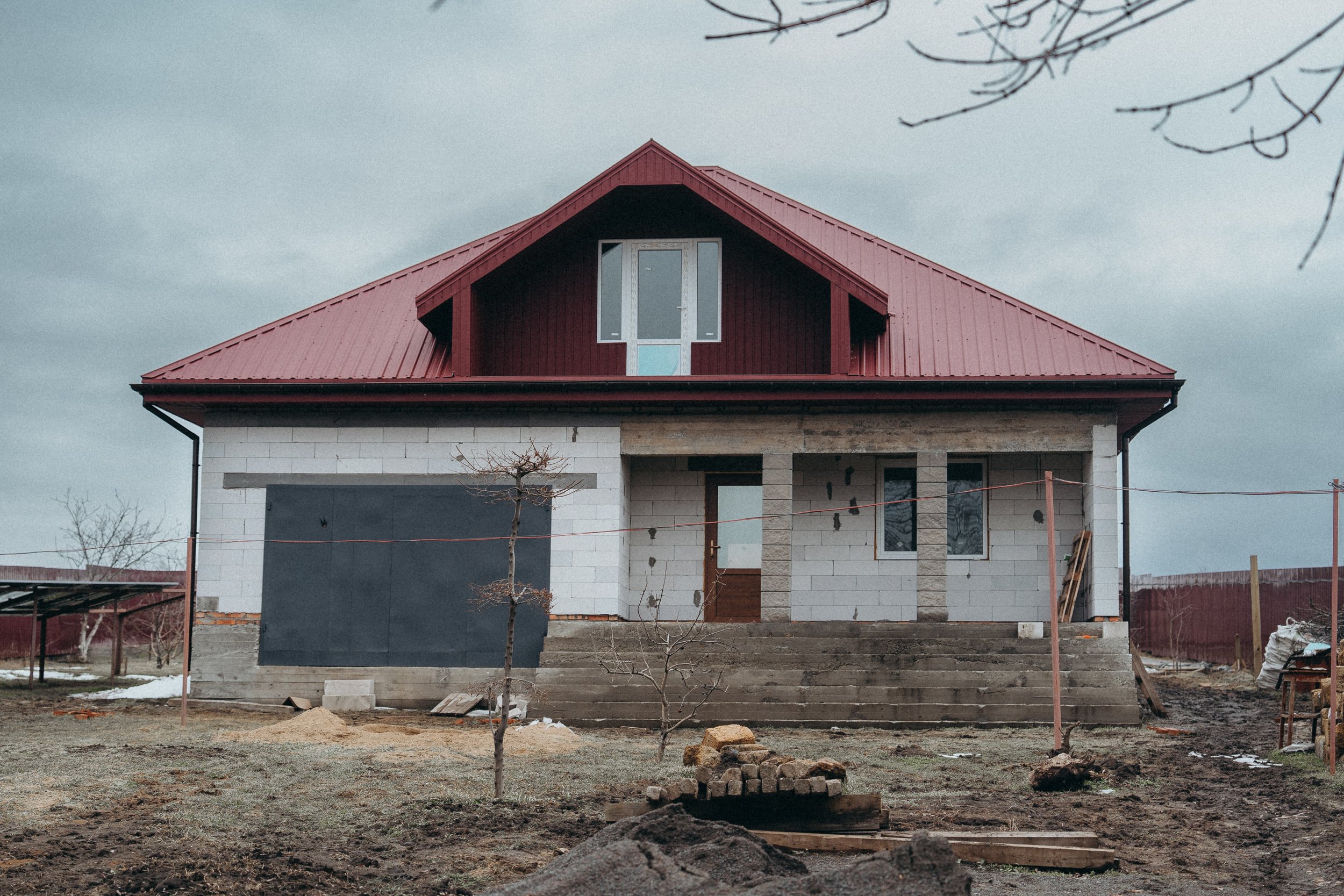
Vet Clinic being built
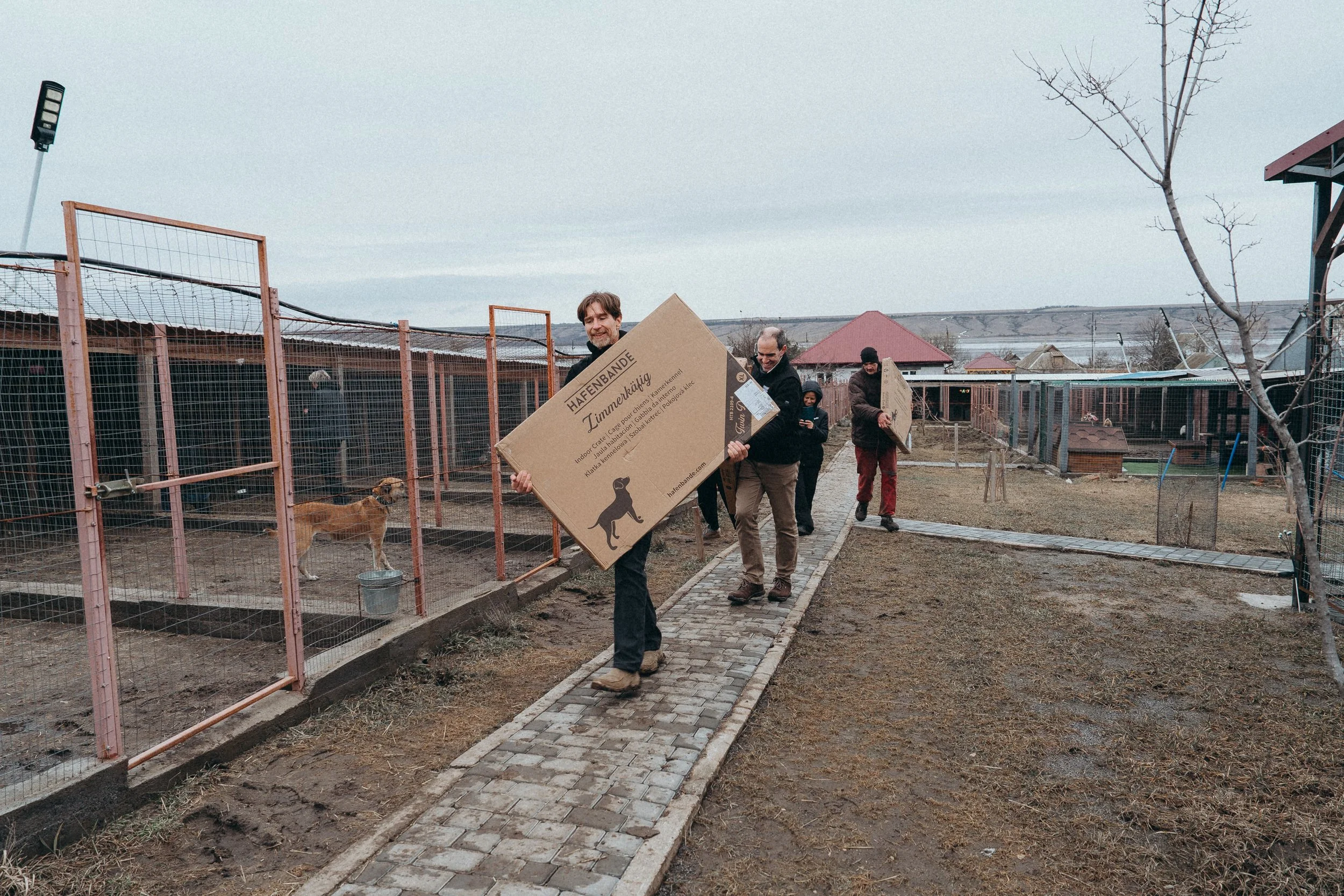
Donated dog crates for the shelter
Although our visit to Ukraine was focussed on our support of dogs and cats, at W&W we will help any animal in need. In December 2024, as a result of a Russian drone attack, there was a major oil spill in Odessa Harbour. Official estimates say 5,000 dead birds were counted, but local people suspect there were a lot more than this. We visit a shelter that was established to rescue animals from combat zones, but they became the main facility to help rescue hundreds of birds following the oil spill. After the initial cleaning to remove the oil, many of the birds needed time for their flight feathers to grow back before they could be released. After a tour of the shelter, the owner takes great pride in taking us to the shore of the Black Sea where they now regularly feed many of the birds they rescued, including a large number of swans. This is yet another example of how animals are caught up in deadly conflict zones and thankfully there are dedicated volunteers who will do everything they can to save them.
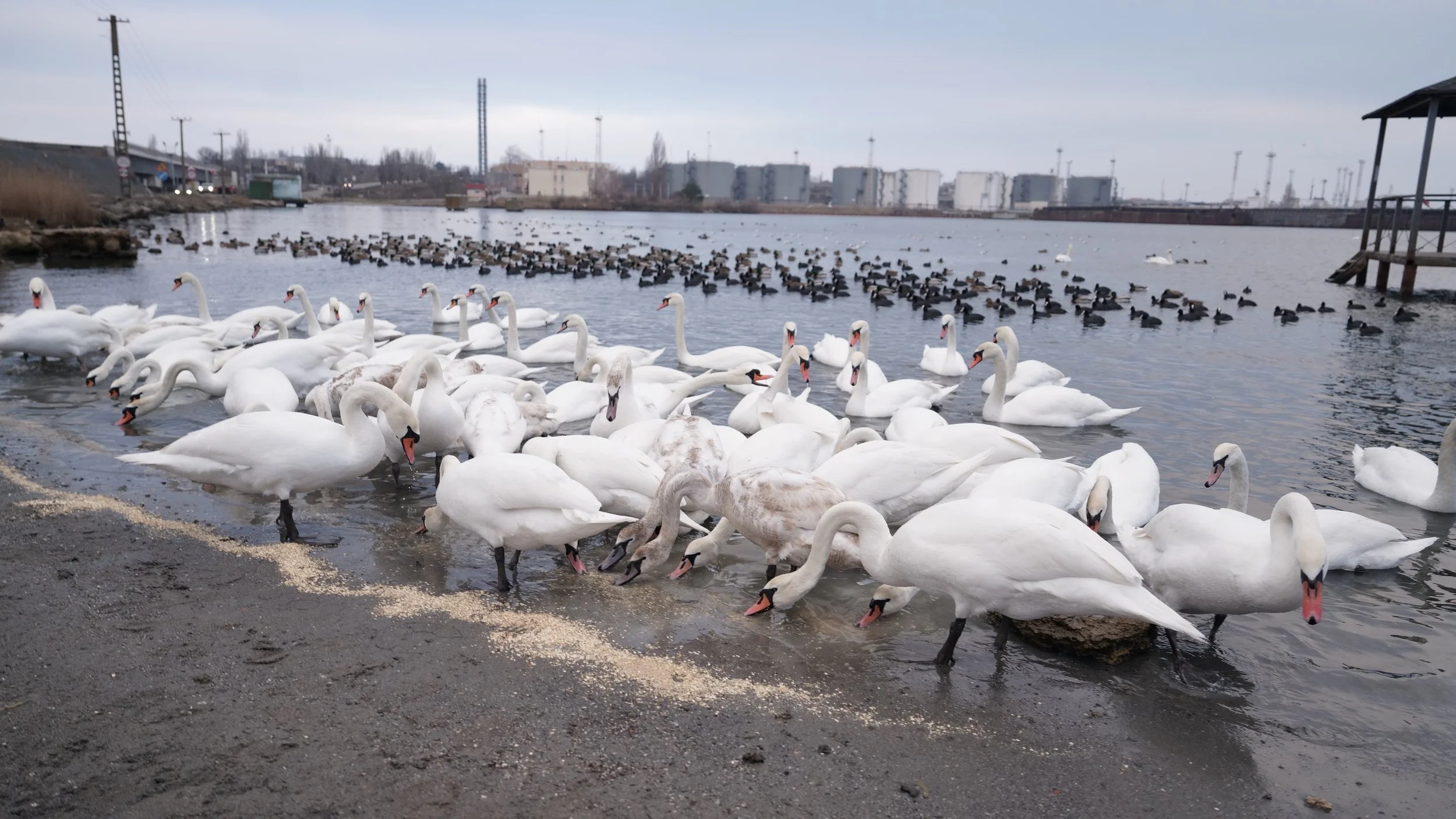
Swan feeding at the sanctuary
Near the end of our trip, we visit a place called Zatoka. This was a resort town positioned on the Black Sea with hotels, shops and golden sandy beaches. When the war started, this was a high-risk destination for a possible navel landing. Missile strikes hit a number of hotels and private housing and since then, the place has become deserted. Walking around is really eerie as we see empty buildings with their gates locked up, abandoned shops with signs swinging in the wind and the odd ‘hedgehog’, which is a defensive structure to stop tanks, positioned on walkways leading off the beach. Our guide who feeds the dogs in this area takes us through a hotel complex to see a group of 15 dogs living together. She tells us that the owner of the property has said he will kill them all if they are not sterilised soon. Thankfully there is another hotel owner that has granted us permission to use his premises to carry out the surgeries and we commit there and then to organise and fund a vet team to visit the area as soon as possible. Since our return, we have arranged the team and they will now target 150 dogs and cats to be sterilised in the coming weeks.
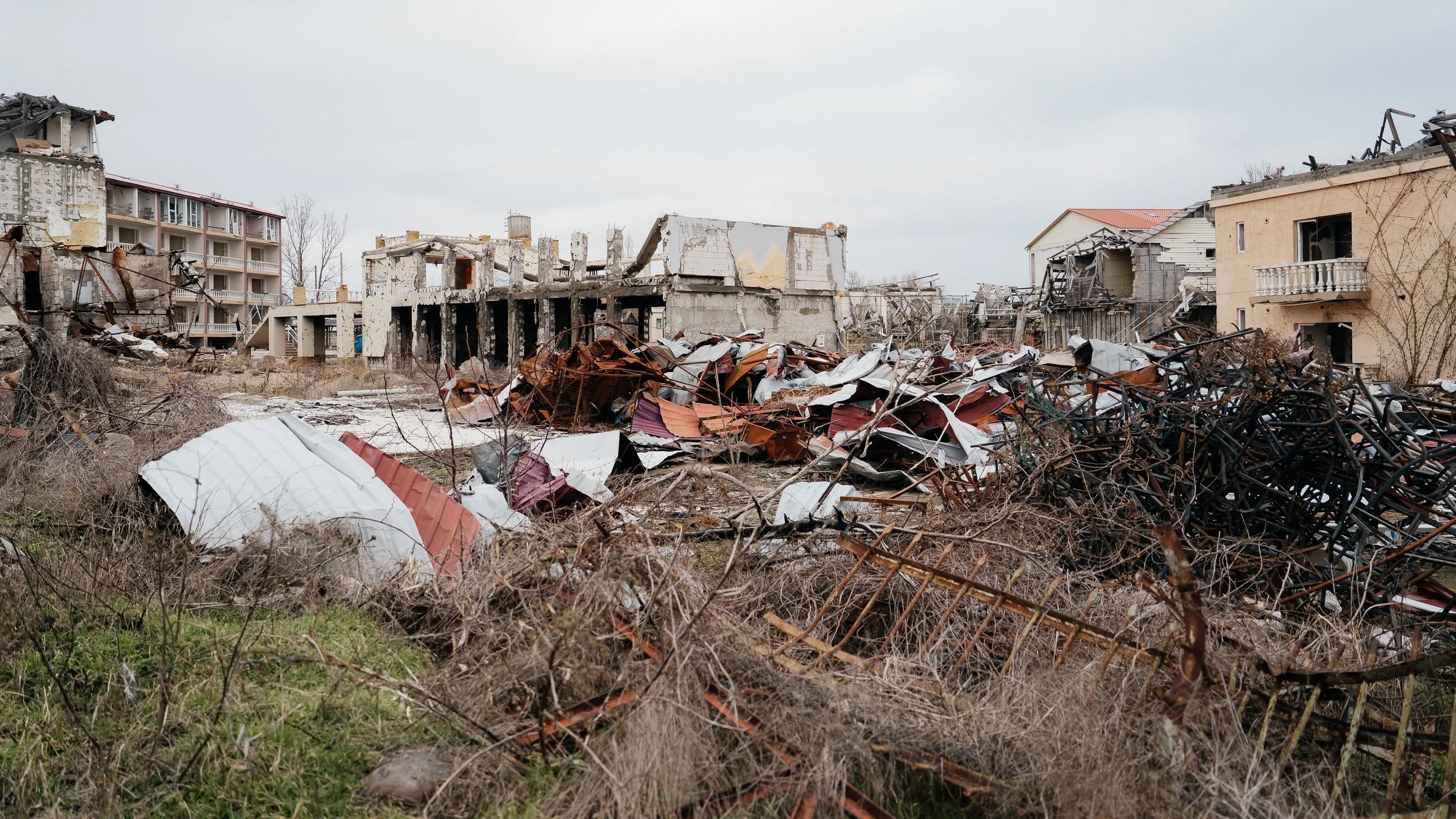
Zatoka bomb damage
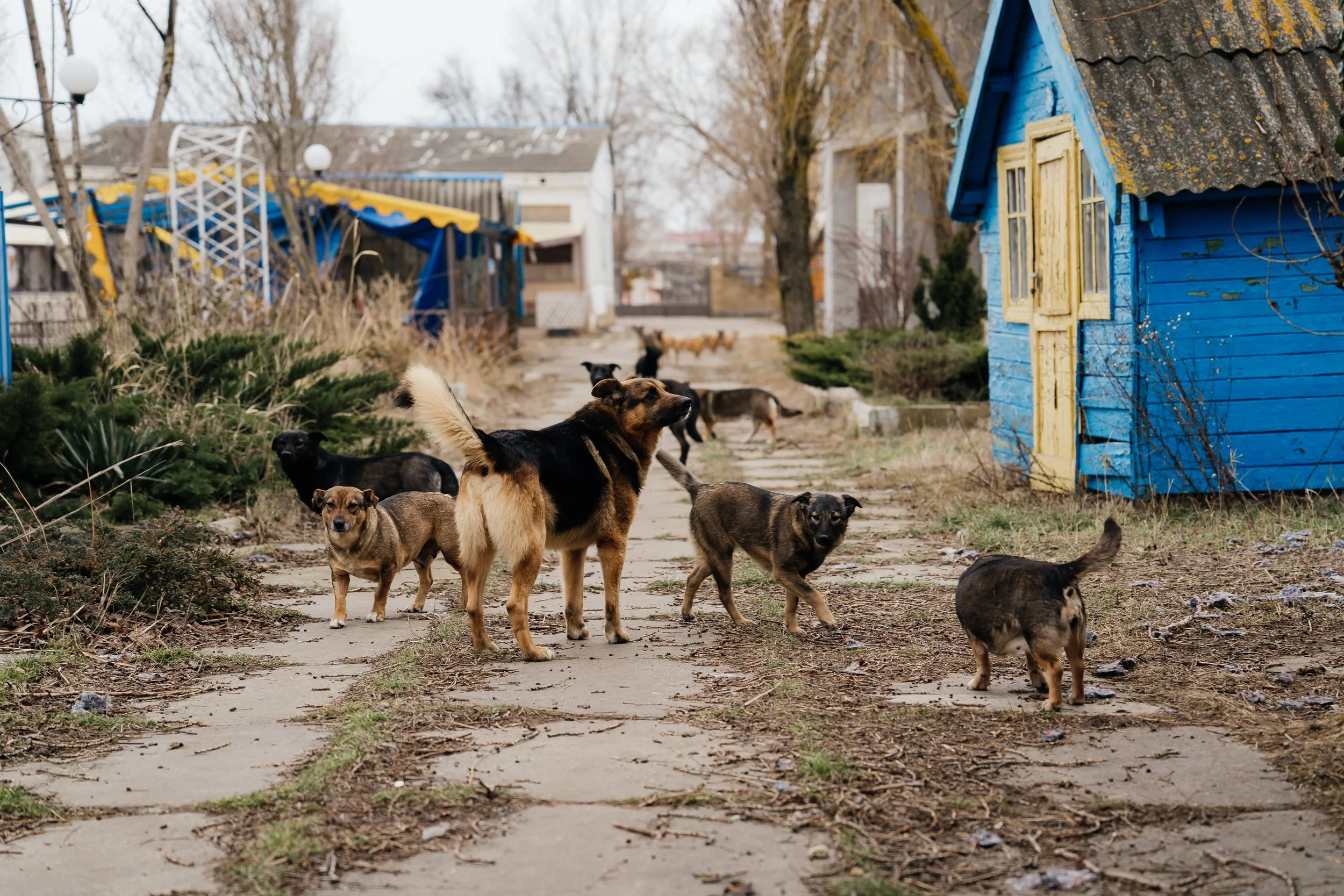
Zatoka street dogs
It is an honour to be able to help so many animals and people in Ukraine in their time of need. Although conditions have worsened with regular air strikes, fluctuating power supplies and a deteriorating infrastructure, we have seen how our project has and still is making a huge difference. Many of the animals we have seen would not have survived the winter without the constant feeding programme and distribution of dog kennels. The number of dogs and cats where sterilisation programmes have been running, has stabilised and prevented the situation from becoming much worse. But you can also see the impact we are having on people. Our network of volunteers just want to help the animals in Ukraine and we are enabling them to do it. Their dedication and passion to help every dog and cat, despite the challenging conditions, is overwhelming to see and something that drives us on to keep raising the funds to enable them to continue. From everyone we met in Ukraine and all of the animals in their care, thank you so much for your donations. Together, we really are making a difference!
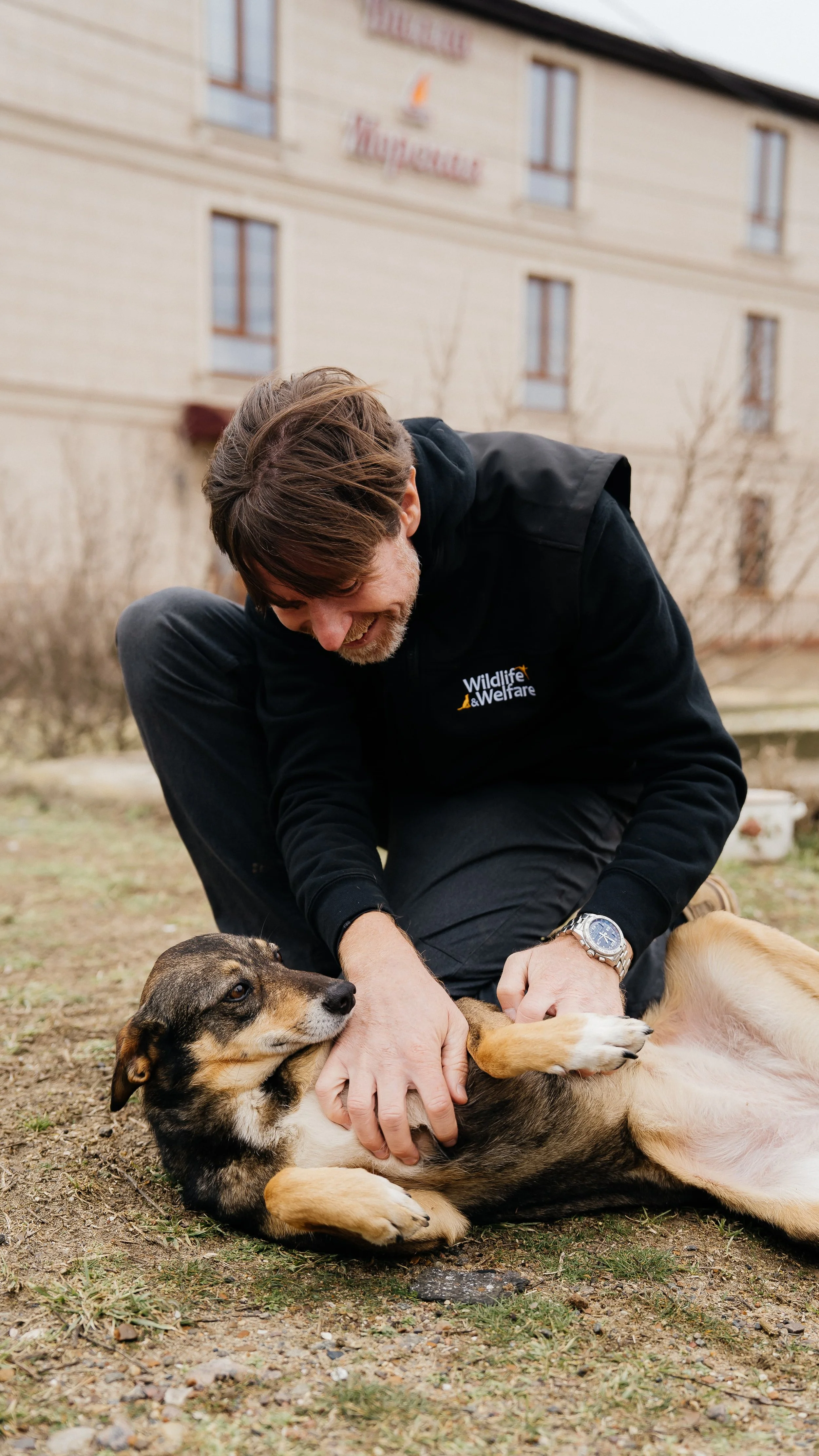
Gregg playing with a street dog