
Spring flowers and biodiversity: How early blooms help wildlife thrive
As the days lengthen and the air softens, spring flowers begin to appear splashes of colour that signal the start of a new season. But these early blooms do far more than brighten gardens and woodlands. They play a crucial role in supporting biodiversity, feeding pollinators, and strengthening local ecosystems.
If you’re looking for simple, meaningful ways to help wildlife this year, planting wildlife-friendly spring flowers is one of the most effective steps you can take.
Why Spring flowers are essential for biodiversity
Early-flowering plants such as primroses, snowdrops, crocuses, and wild daffodils are vital for the survival of many species. These blooms provide:
Nectar for emerging pollinators like queen bumblebees waking from hibernation
Pollen for solitary bees, which begin nesting earlier than many people realise
Habitat and shelter for beetles, spiders, and other beneficial insects
Food sources for birds, thanks to the insects attracted by early flowers
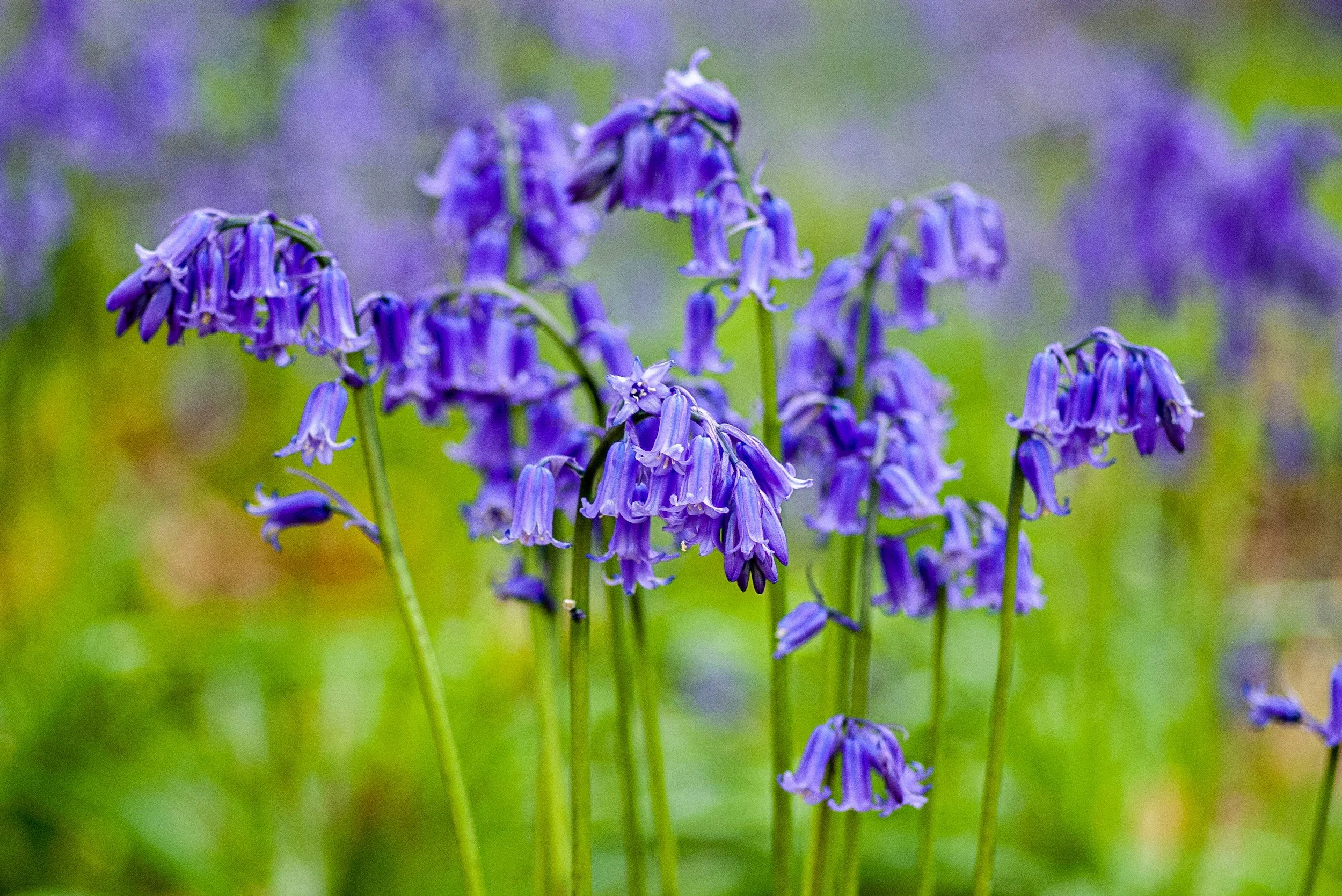
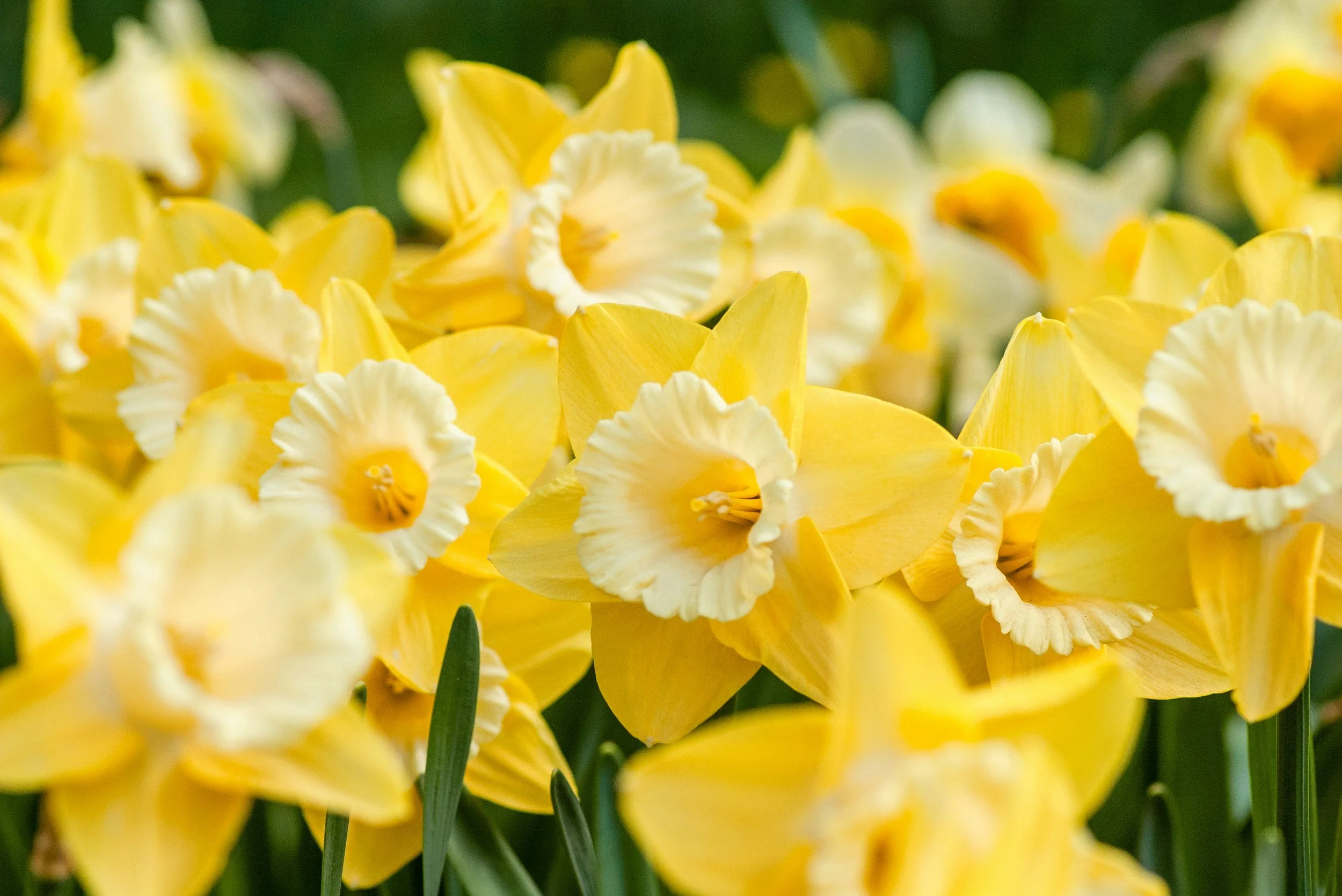
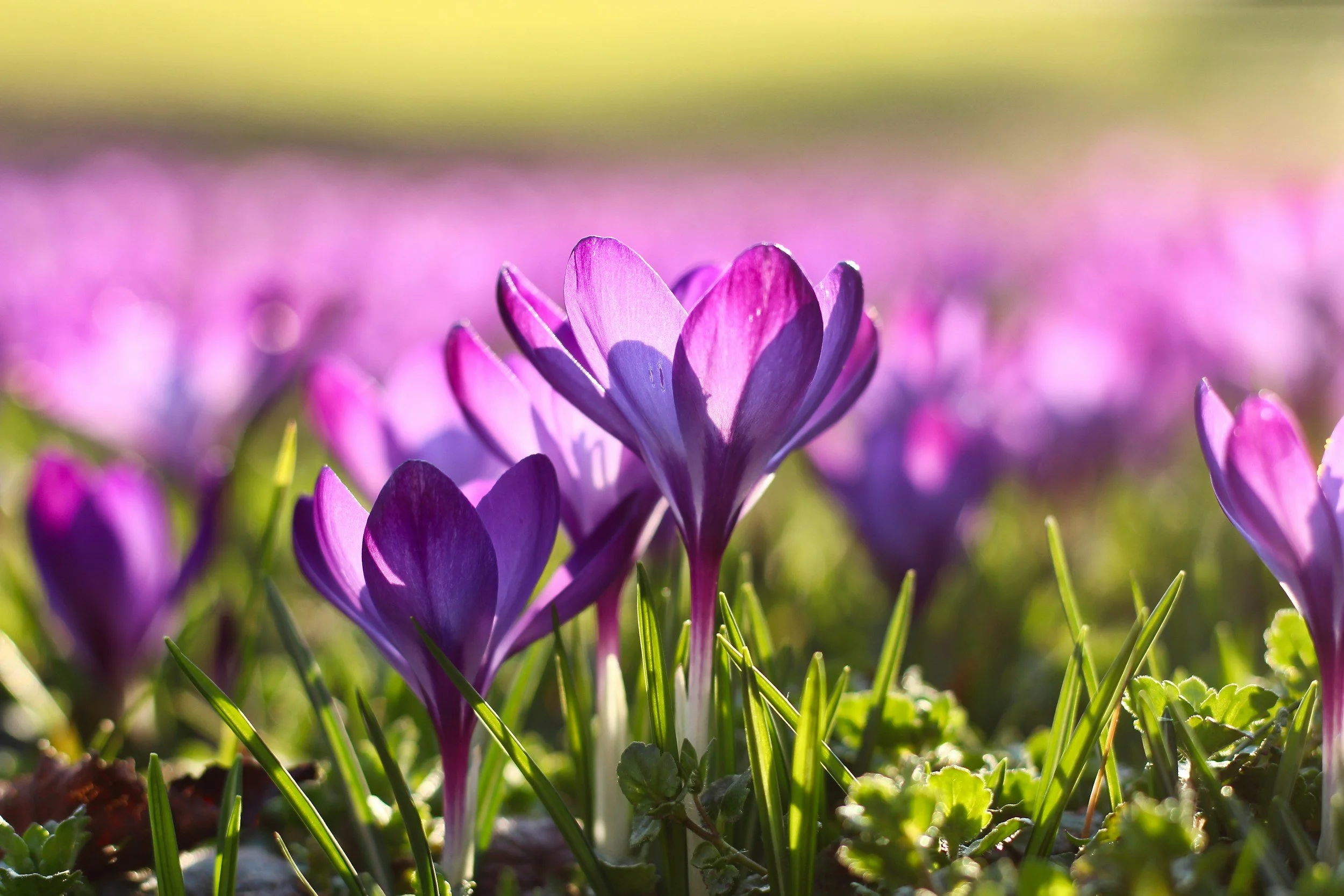
Without these first flowers, the entire spring food chain would struggle to get started. Healthy biodiversity begins with healthy early blooms.
Spring flowers create mini ecosystems
One of the most powerful things about spring flowers is how they work together to create small but thriving ecosystems. A mix of native species offers:
A longer flowering season
A wider range of nectar and pollen
More habitat variety
Greater resilience to changing weather
Even a small garden, balcony, or community space can become a pollinator-friendly habitat with the right combination of plants.
How to support biodiversity in your garden
If you want to make your outdoor space more wildlife-friendly this spring, focus on:
Native spring flowers that local pollinators recognise
Varied bloom times to support insects from early spring to late summer
Pesticide-free planting, which protects bees and other beneficial species
Clusters of flowers, which are easier for pollinators to find
To make it simple, we’ve curated a range of biodiversity-boosting plants in our shop perfect for anyone looking to support pollinators, encourage wildlife, and enjoy a garden full of colour and life.
By choosing wildlife-friendly spring flowers, you’re not just planting for beauty you’re planting for the future of nature.
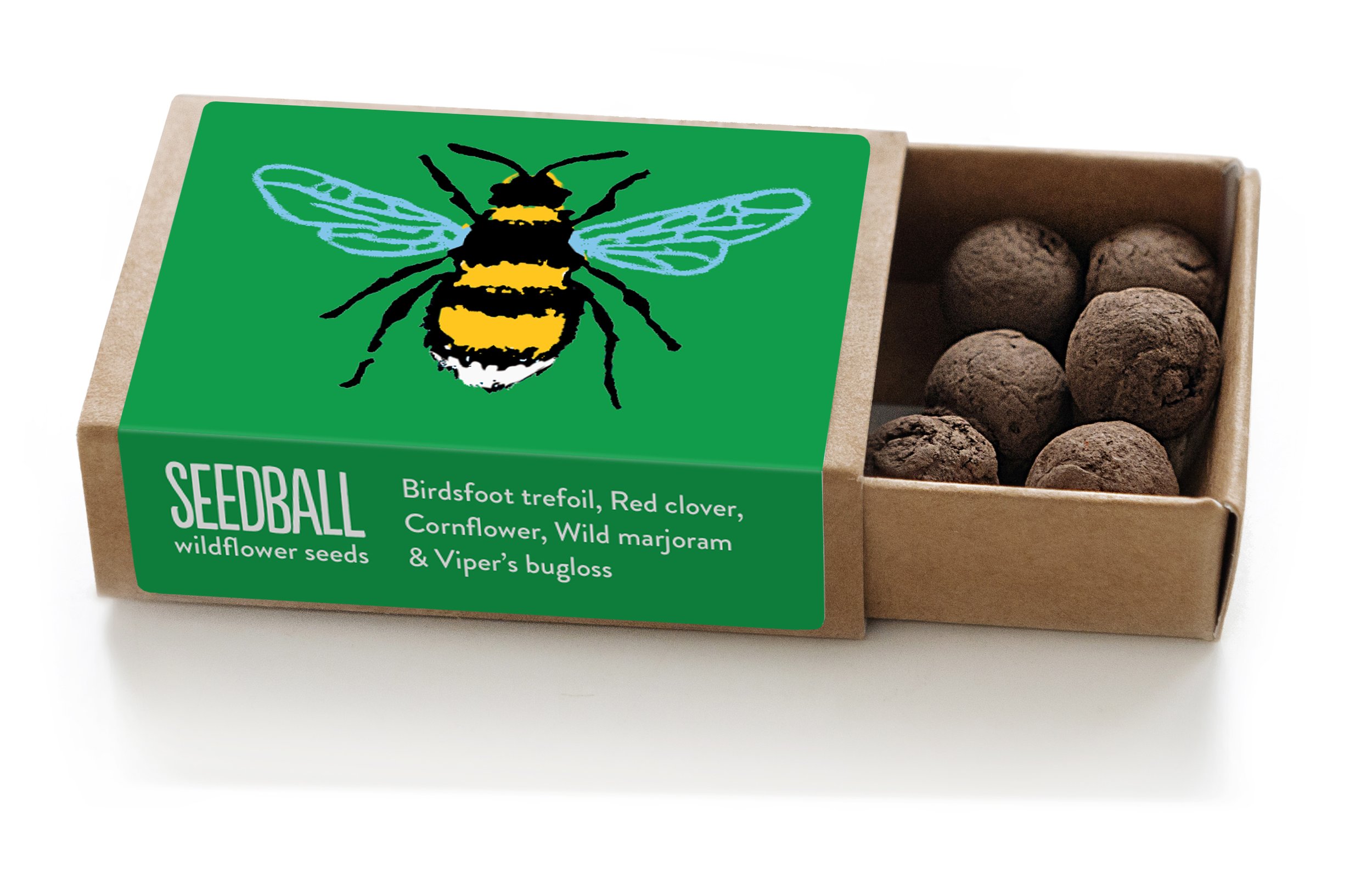
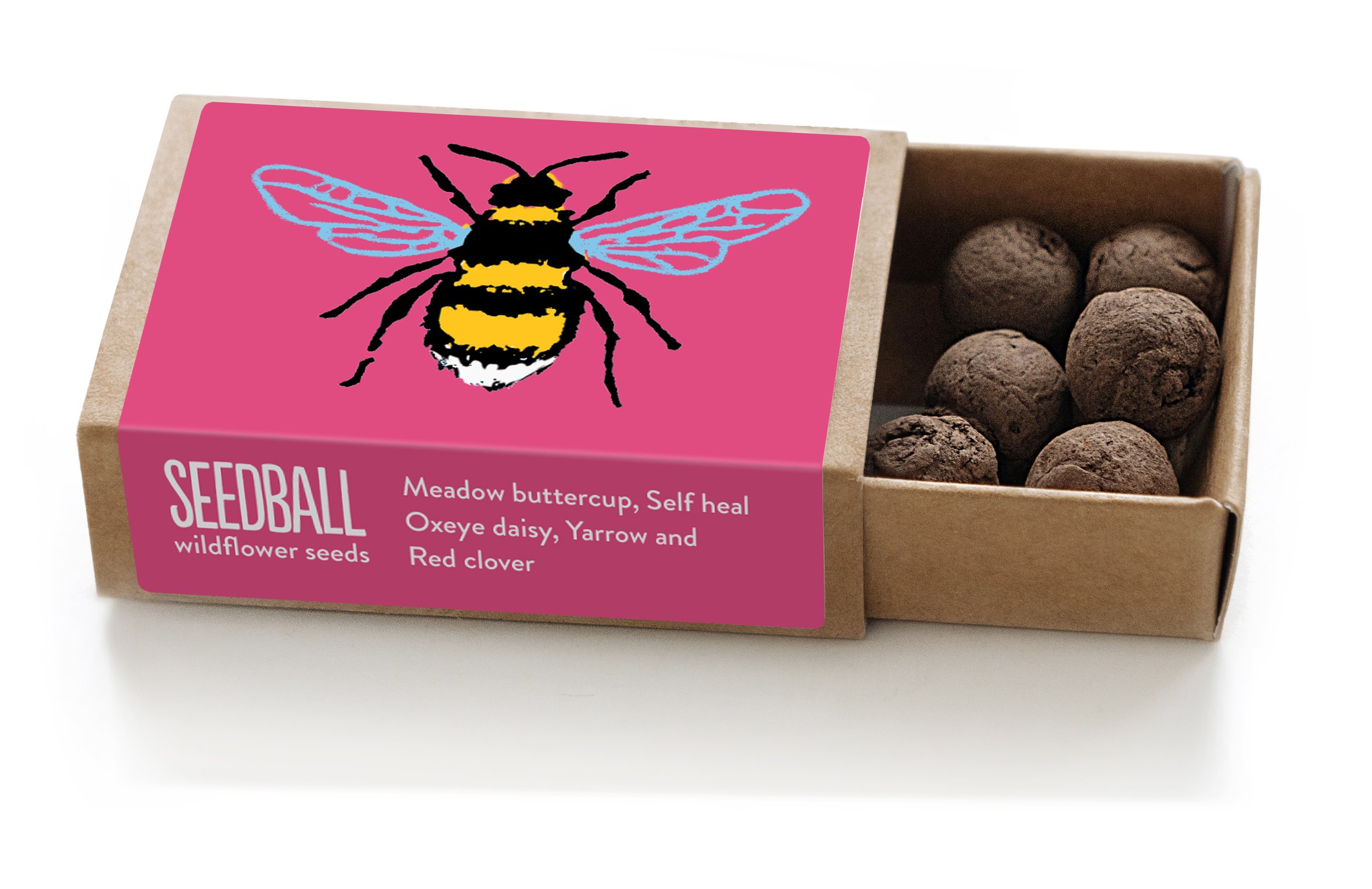
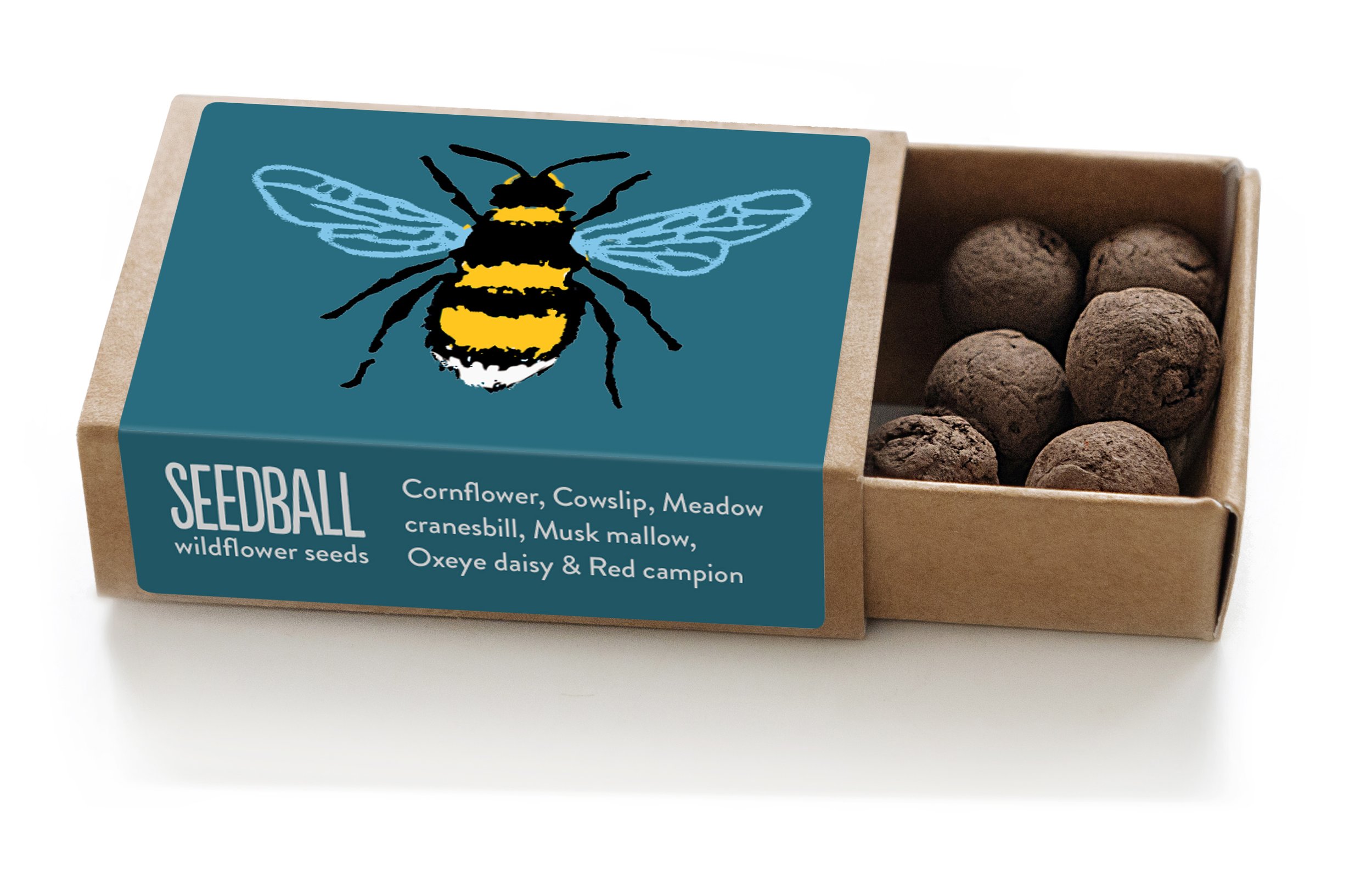
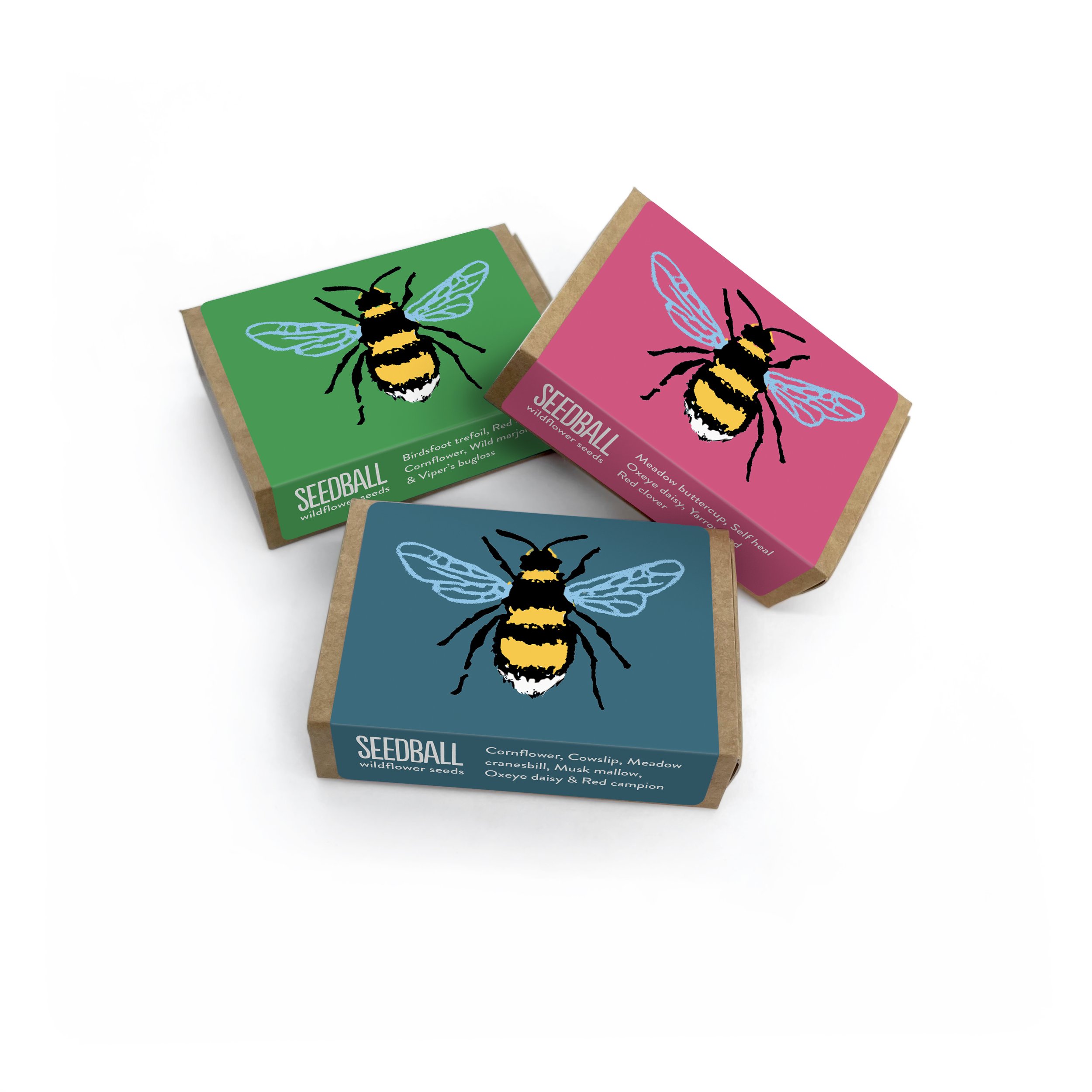
Help local bees thrive with our Bee Seedballs — a colourful, gift-ready box of 6 ready-to-scatter seedballs packed with nectar-rich wildflowers chosen to feed honey bees, bumblebees and solitary bees. Each seedball is hand-made by encasing wildflower seed in clay and peat-free compost; a small amount of natural chilli is often included to deter slugs and seed predators, so more seed survives to germinate. These seedballs are perfect for window boxes, balcony pots, paving cracks and small border patches — no digging or specialist tools required.
The bee mix contains a carefully selected blend of hardy, bee-attractive species (for example: Common Toadflax, Cornflower, Cowslip, Meadow cranesbill, Musk mallow, Oxeye daisy and Red campion) that deliver colour and forage through the season. Planting a small patch of bee flowers helps provide nectar and pollen at different times of year for a wide range of pollinators.
Why you’ll love them:
Ready to use: Simply scatter onto soil or compost. No digging.
Pollinator focused: Species chosen to maximise nectar & pollen for bees.
Eco credentials: Peat-free compost and compact, low-waste packaging.
Perfect as a small, postable thank-you or birthday gift for nature lovers and children’s party favours — compact packaging and a wildlife-first message make these an easy way to support local biodiversity.
Seedball was founded by conservation scientists to make it easy for people to grow native wildflowers and support pollinators. Seedballs use UK-sourced wildflower seed, peat-free compost and recyclable/compostable packaging where possible, so your purchase helps both bumblebees and more sustainable gardening.
Packs available:
Green Bee Mix: Includes Birdsfoot Trefoil, Red Clover, Viper’s Bugloss and Wild Marjoram – all recommended as bee-friendly plants by the Bumblebee Conservation Trust.
Pink Bee Mix: A mix of Meadow buttercup, Oxeye daisy, Red clover, Self heal and Yarrow.
Teal Bee Mix: A mix of Common toadflax, Cornflower, Cowslip, Meadow cranesbill, Musk mallow, Oxeye daisy and Red campion.
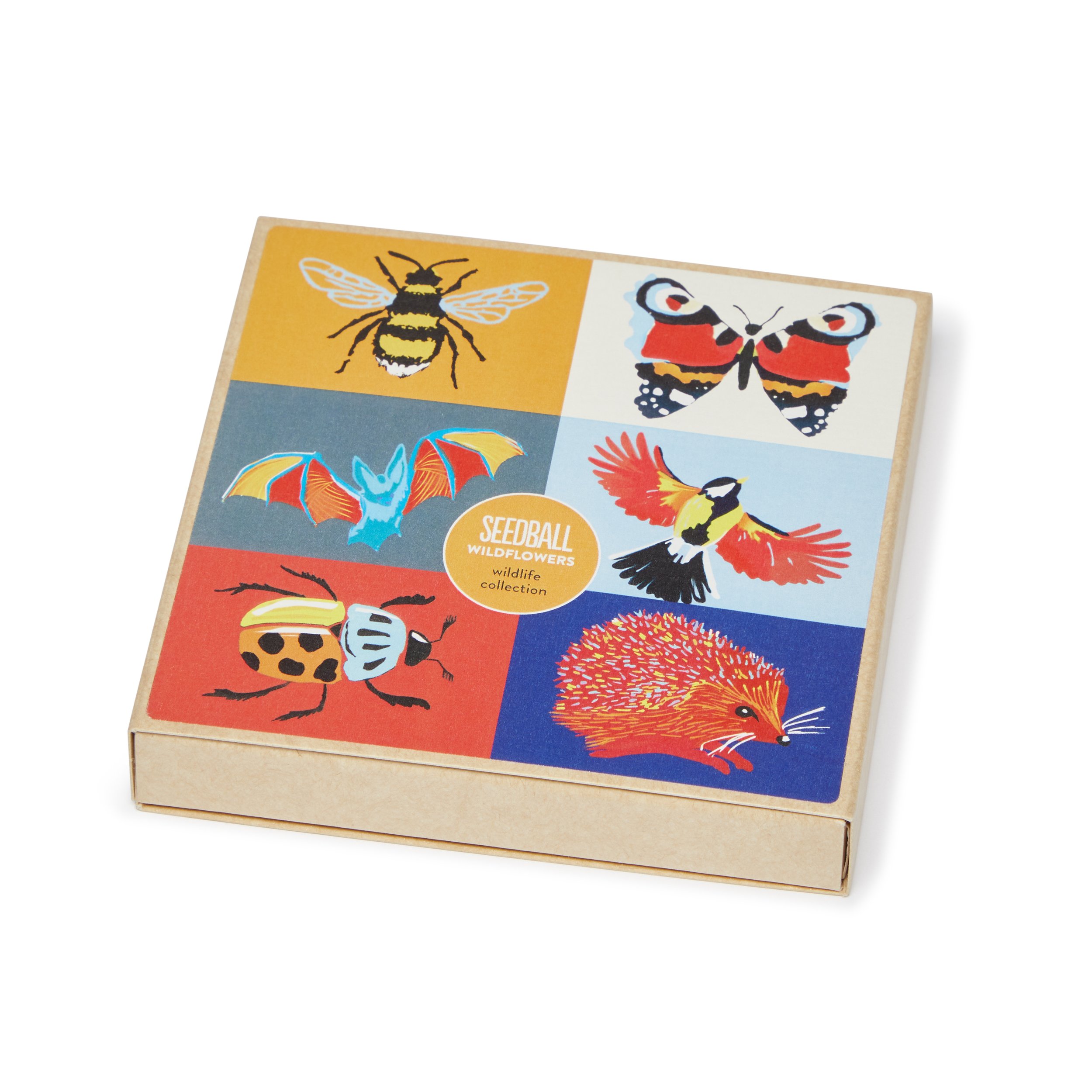
Share the gift of nature with the Wildlife Collection Seedballs. This eco-friendly wildflower seedball set includes six charmingly illustrated boxes, each blend specially chosen to attract different garden wildlife – from bees and butterflies to birds, bats, beetles and even hedgehogs. Simply scatter the native seedballs on soil and watch a pop-up meadow bloom, buzzing with pollinators and bursting with colour. Packaged in 100% recycled cardboard, this sustainable garden gift supports local biodiversity and is ideal for any nature-loving gardener or gift giver who wants to help bees and butterflies thrive.
Pollinator-friendly: Native wildflower mixes feed and attract bees, butterflies, birds, bats, beetles and even hedgehogs, helping to support essential pollinator.
Easy to plant: Incredibly simple to use – just scatter the clay seedballs on soil or compost (no digging required) and watch nature do the rest.
Sustainable & Beautiful: Each seedball box is made from 100% recycled cardboard with charming wildlife illustrations. The seedballs themselves contain only natural ingredients (soil, clay and wildflower seeds), making this gift good for your garden and the planet.
Thoughtful gift: A nature-inspired present that supports biodiversity and conservation. Every purchase also contributes to Wildlife & Welfare’s conservation work, so you’re giving back to wildlife in more ways than one.
This seedball collection turns gardening into a fun, hands-on adventure. Within weeks of planting, you’ll see a wildflower patch appear – a mini meadow right in your garden. It’s a great project for families and kids: children and adults alike can join in planting and learn about how every flower helps our ecosystemhoneybeesuite.com. The Wildlife Collection makes a wonderful present for birthdays, Mother’s Day or any special occasion. Its warm, friendly packaging and variety of wildflower mixes make it a thoughtful, sustainable gift that keeps on giving, growing more life and colour with every seedball.
What's Inside?
Bee Box: A mix of native wildflowers that bees will just love! This carefully selected mix is designed specifically to attract solitary bees, honey bees and bumblebees. Includes birdsfoot trefoil, foxglove, red Clover, viper’s bugloss and wild marjoram.
Butterfly Box: This lovely collection of mostly purple, pink and blue flowers is designed to attract butterflies to our gardens, balconies and window boxes and uses only flowers recommended by Butterfly Conservation. Includes purple loosestrife, forget-me-not, musk mallow, red campion and yarrow.
Hedgehog Box: A wildflower patch of is a super addition to creating a hedgehog friendly garden, not only in providing shelter but importantly to attract a whole range of tasty insects for hedgehogs to feed on. This mix includes yellow rattle, wild carrot, birdsfoot trefoil, tufted vetch, self heal and poppy.
Bird Box: This careful selection of plants will boost the food supply for a wide range of birds including goldfinches, blue tits, chaffinches, greenfinches, robins, starlings, increasing the number of birds seen in your garden. Whilst in bloom the flowers will attract insects that many birds feed on, while birds will also feed directly on the plants and seeds themselves. Includes corn marigold, poppy, greater knapweed, sheep sorrel, tufted vetch, and wild carrot.
Beetle Box: The ideal mix to attract ladybirds and pollinating beetles, who are really important for our garden ecosystems (did you know that beetles pollinated the first flowers at the time of the dinosaurs!). The mix includes common knapweed, cornflower, cow parsley, field scabious, foxglove, great burnet and yarrow.
Bat Box: Contains a special mix of wildflowers to attract a wide diversity of insects that bats feed on (such as moths), including flowers that release their fragrance in the evening when bats are most active in our gardens. The mix also has plants with a combination of long and short pollen tubes and a range of colours and shapes of flower to maximise the number of insects that they attract. Includes borage, cornflower, corn marigold, evening primrose, night-scented stock and wallflower.
Help local bees thrive with our Bee Seedballs — a colourful, gift-ready box of 6 ready-to-scatter seedballs packed with nectar-rich wildflowers chosen to feed honey bees, bumblebees and solitary bees. Each seedball is hand-made by encasing wildflower seed in clay and peat-free compost; a small amount of natural chilli is often included to deter slugs and seed predators, so more seed survives to germinate. These seedballs are perfect for window boxes, balcony pots, paving cracks and small border patches — no digging or specialist tools required.
The bee mix contains a carefully selected blend of hardy, bee-attractive species (for example: Common Toadflax, Cornflower, Cowslip, Meadow cranesbill, Musk mallow, Oxeye daisy and Red campion) that deliver colour and forage through the season. Planting a small patch of bee flowers helps provide nectar and pollen at different times of year for a wide range of pollinators.
Why you’ll love them:
Ready to use: Simply scatter onto soil or compost. No digging.
Pollinator focused: Species chosen to maximise nectar & pollen for bees.
Eco credentials: Peat-free compost and compact, low-waste packaging.
Perfect as a small, postable thank-you or birthday gift for nature lovers and children’s party favours — compact packaging and a wildlife-first message make these an easy way to support local biodiversity.
Seedball was founded by conservation scientists to make it easy for people to grow native wildflowers and support pollinators. Seedballs use UK-sourced wildflower seed, peat-free compost and recyclable/compostable packaging where possible, so your purchase helps both bumblebees and more sustainable gardening.
Packs available:
Green Bee Mix: Includes Birdsfoot Trefoil, Red Clover, Viper’s Bugloss and Wild Marjoram – all recommended as bee-friendly plants by the Bumblebee Conservation Trust.
Pink Bee Mix: A mix of Meadow buttercup, Oxeye daisy, Red clover, Self heal and Yarrow.
Teal Bee Mix: A mix of Common toadflax, Cornflower, Cowslip, Meadow cranesbill, Musk mallow, Oxeye daisy and Red campion.

Make birthdays bloom — give the gift of wildflowers with our Happy Birthday bee & butterfly mix seedballs. Each box contains 6 ready-to-scatter seedballs, hand-made from a blend of clay, peat-free compost and a bee-friendly wildflower seed mix so the seeds stay protected until conditions are right. These low-effort seedballs are perfect for pots, window boxes, paving cracks and small beds — no digging or gardening experience required.
The bee & butterfly mix is selected to provide nectar and pollen through the season, attracting bees, hoverflies and butterflies to small urban and garden spaces. Seedballs use an ancient, proven technique — the clay casing and compost give seeds a mini-ecosystem and (where used) a pinch of natural chilli helps deter pests while seedlings establish.
Why this makes a great birthday gift
Ready to use: Scatter and forget for simple, low-effort planting.
Pollinator friendly: Chosen to feed bees & butterflies through the season.
Eco credentials: Peat-free compost and compact, gift-friendly packaging.
Perfect as a small, planet-friendly birthday gift or party return present — seedballs are compact, easy to post or hand out at parties and encourage biodiversity at home.
Wildflower Seed Mix include:
Cornflower (Centaurea cyanus)
Type: Annual
Height: 90 cm
Flowering: June to August
Additional Notes: Edible, with a refreshing cucumber-like taste.
Red Campion (Silene dioica)
Type: Perennial
Height: 20-60 cm
Flowering: March to November
Additional Notes: Named after Silenus from Greek mythology, it requires two plants for seed production.
Oxeye Daisy (Leucanthemum vulgare)
Type: Perennial
Height: 30-90 cm
Flowering: May to September
Additional Notes: Historically believed to repel lightning.
Musk Mallow (Malva moschata)
Type: Perennial
Height: 40-70 cm
Flowering: June to August
Additional Notes: Cultivated for its fragrant seeds and fibre used in sugar clarification.
Meadow Cranesbill (Geranium pratense)
Type: Perennial
Height: 30-70 cm
Flowering: June to September
Additional Notes: Notable for its pointed seed pods resembling cranes’ bills.
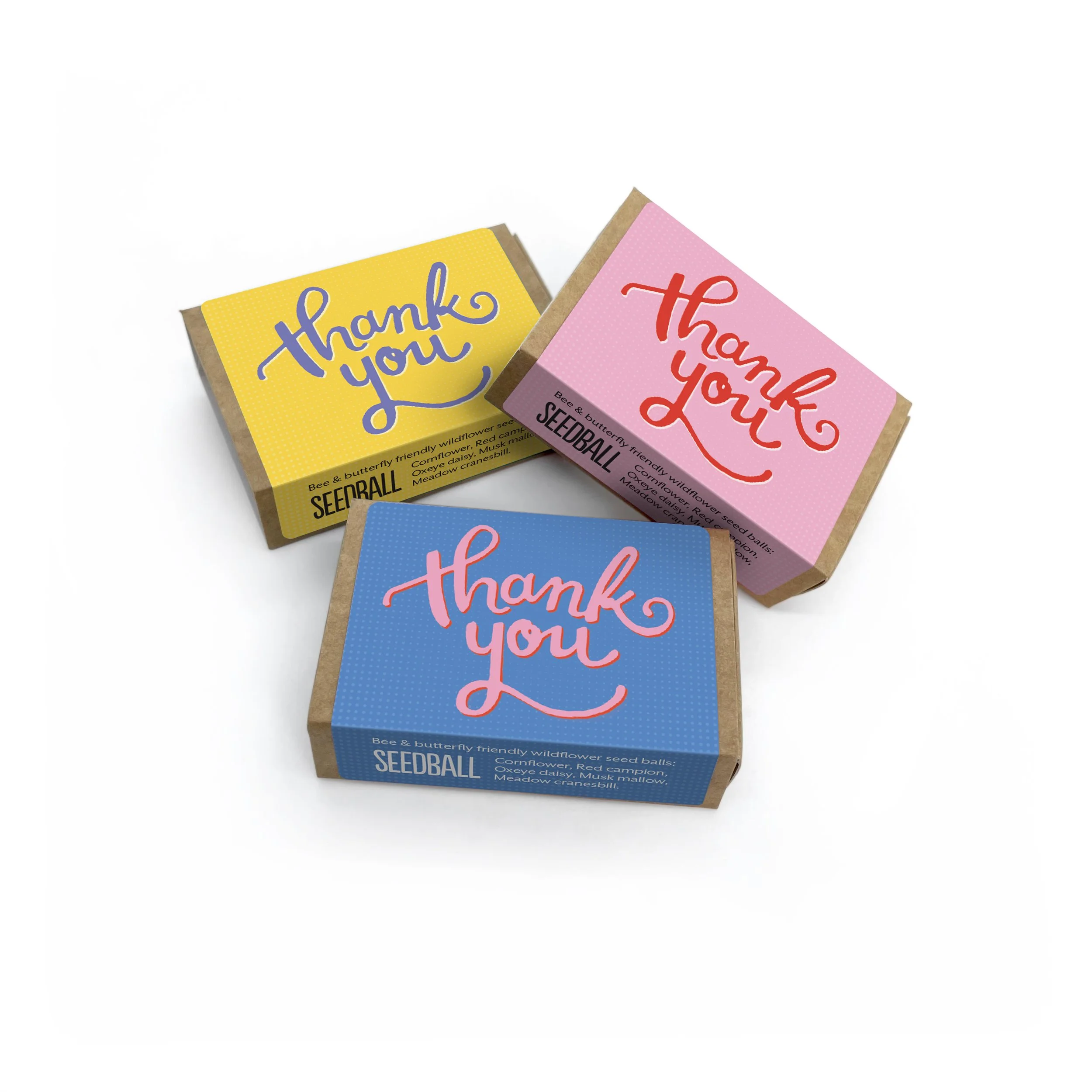
Say “thank you” with flowers — not just a card. Our Thank You Seedballs are a small, gift-ready box of 6 ready-to-scatter seedballs filled with a bee & butterfly-friendly wildflower mix chosen to bring colour and nectar to small spaces like pots, window boxes, paving cracks and borders. Each seedball is hand-made using an ancient, proven technique: native wildflower seed is encased in clay and peat-free compost (and often a pinch of chilli to deter pests) so seeds stay protected until conditions are right for germination. Scatter in spring or autumn, leave about 10 cm between balls and let rain and pollinators do the rest — no digging or specialist kit required.
Why you’ll love Thank You Seedballs:
Small, gift-friendly box: Perfect as a thank-you favour or postal memento.
Pollinator friendly: Selected to provide nectar and pollen for bees, hoverflies and butterflies.
Low effort & eco credentials: Peat-free compost, natural clay casing and compact packaging.
Perfect as a small, sustainable thank-you gift — easy to post, or include with cards. All Seedball mixes are produced by Seedball — a company set up by conservation scientists to increase British wildflowers and support pollinators. Seed sourcing is responsibly managed in the UK and mixes use peat-free compost to reduce environmental impact.
Wildflower Seed mix included:
Cornflower (Centaurea cyanus)
Annual
Height: 90cm
Flowers: June to August
Cornflowers are edible. They have a cucumber-like taste. Flowers can be consumed in the form of salad and tea, or used as a garnish.
Red Campion (Silene dioica)
A perennial with rose pink petals
Height: 20-60cm
Flowers: March to November
Silenus the merry god of the woodlands in Greek mythology, gave his name to Silene dioica. The second part of its scientific name, dioica, means 'two houses', and refers to the fact that each Red Campion plant has flowers of one sex only, so that two plants are needed to make seeds.
Oxeye Daisy (Leucanthemum vulgare)
Perennial
Height: 30-90cm
Flowers: May to September
In Austria and Germany oxeye daisies were hung inside the house as it was believed they would repel lightning.
Musk Mallow (Malva moschata)
Description: A tall perennial with large rose pink petals
Height: 40-70cm
Flowers: June to August
The plant is cultivated for its seeds, which are used in perfumes. The plant also yields a fibre that can be used for clarifying sugar.
Meadow Cranesbill (Geranium pratense)
Perennial
Height: 30-70cm
Flowers: June to September
The large purple flowers of Meadow cranesbill turn into pointed, bill-like seed pods that give the plant its common name.